Netanyahu in Washington: The invisible architecture of US-Iran policy
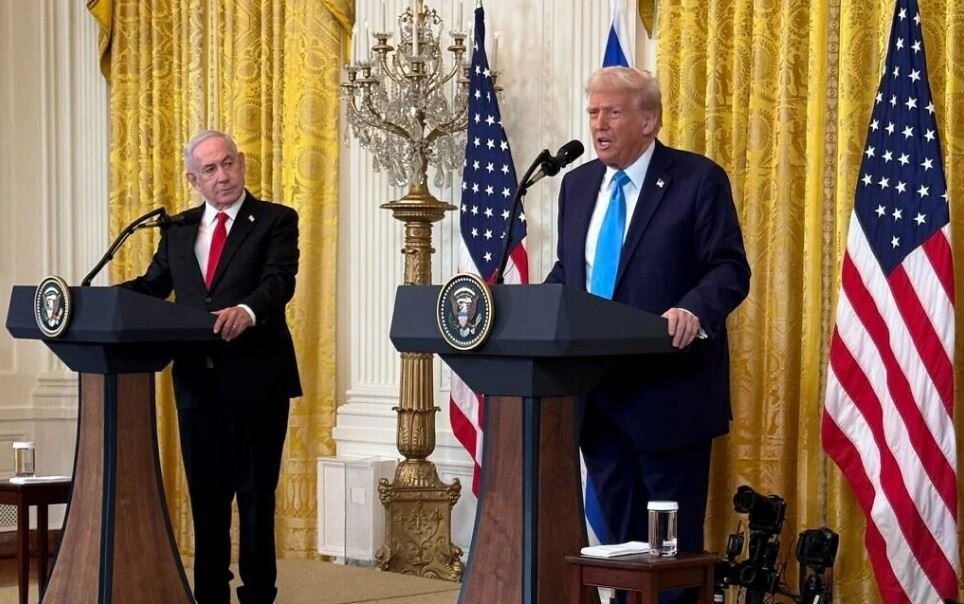
BEIRUT – When Benjamin Netanyahu arrives in Washington, the choreography is familiar: handshakes in the Oval Office, invocations of an “unbreakable alliance,” carefully staged symbolism.
But beneath the ritual lies something far more consequential. This is not diplomacy for display. It is diplomacy for calibration. At moments when Washington begins exploring diplomatic “off-ramps” with Tehran, Israeli leadership moves to narrow the parameters of what those off-ramps can look like.
Netanyahu’s visits are not about persuasion in the conventional sense; they are about reinforcing structural boundaries. Administrations may rotate between parties, but the guardrails surrounding U.S.–Iran policy have proven remarkably durable. Netanyahu does not merely lobby Washington. He reinforces an architecture already embedded within it.
A region transformed
The West Asia confronting American policymakers today bears little resemblance to the landscape that existed during negotiations over the Joint Comprehensive Plan of Action (JCPOA). Iran has evolved from a revolutionary state operating on the margins of the regional order into a central node within it.
Through a network of alliances and armed non-state actors stretching across Lebanon, Iraq, Syria, and Yemen, Tehran has constructed what it calls a forward defense posture, a layered deterrence strategy designed to push confrontation away from Iranian territory. This has altered the military equation. Any direct conflict risks cascading across multiple fronts. The cost of escalation is no longer theoretical.
At the same time, Persian Gulf monarchies once tightly aligned with Washington have diversified their diplomatic portfolios. They engage Beijing, Moscow, and, pragmatically, Tehran itself. The United States remains central, but it is no longer exclusive. In this environment, Israeli policymakers face a strategic dilemma: if Washington and Tehran normalize relations, even partially, Israel’s unique role as the indispensable interlocutor on Iran could diminish. Preventing that dilution, without triggering war, is central to Netanyahu’s Washington calculus.
Israeli policy toward Iran rests on three enduring pillars. First, the nuclear hard stop. Preventing Iran from having any form of nuclear enrichment capability remains the public and diplomatic core of Israeli messaging. This concern spans Israeli political factions. Second, disrupting the regional network.
Beyond centrifuges lies infrastructure: weapons transfers, missile precision upgrades, and cross-border supply corridors. Israeli strategy has long sought to disrupt these channels through intelligence operations, cyber capabilities, and limited strikes designed to stay below the threshold of full war.
Third, blocking strategic normalization. The least discussed, yet perhaps most consequential, pillar is conceptual. Israel works to ensure that Iran is not reframed in Washington as a conventional regional actor. If Tehran becomes “manageable” rather than existential in American strategic discourse, the entire U.S.–Israel dynamic shifts. By sustaining a narrative of persistent threat, Israeli diplomacy ensures that containment, not accommodation, remains the default American instinct.
Influence as infrastructure
Much commentary reduces Israeli influence in Washington to lobbying. That framing oversimplifies a far more systemic reality. Over decades, intelligence cooperation, joint missile defense programs, cybersecurity partnerships, and congressional alliances have produced an integrated security ecosystem. Israeli threat assessments are not external memos; they are often inputs into shared analytical processes. When American lawmakers debate Iran policy, they do so within a strategic vocabulary shaped by years of shared assessments. This does not mean the United States lacks agency.
American policymakers weigh global considerations, competition with China, energy stability, electoral politics, and military overstretch. But Israeli framing frequently defines the baseline from which those calculations begin. Influence, in this case, is not episodic. It is structural.
The withdrawal of the United States from the nuclear agreement during the Trump administration marked the apex of U.S.–Israeli alignment on Iran strategy.
The “maximum pressure” campaign aimed to coerce Tehran through sweeping sanctions and economic isolation. The outcome was instructive. Iran did not collapse. Instead, it expanded enrichment levels and deepened regional entrenchment.
The episode demonstrated that pressure without diplomatic architecture produces escalation, not resolution. For Israeli policymakers, this reinforced a lesson: influence must extend beyond advocating pressure. It must shape any future diplomatic framework from within.
Leave a Comment